
When a flat roof starts leaking, the first instinct is often to look for a quick fix. A small crack, a damp patch on the ceiling, or pooling water after heavy storms can make it seem like a simple repair job. That leads many homeowners to ask the same question: Can you repair flat roofs yourself?
Technically, some flat roof repairs are possible. In reality, attempting to fix a flat roof without professional help often creates bigger problems, shortens the roof’s lifespan, and results in costly repairs later. Understanding why DIY flat roof repair rarely works helps you protect your home and avoid unnecessary damage.
Why Flat Roof Repairs Are More Complex Than They Look
A flat roof may appear straightforward, but it relies on precise layers, materials, and detailing to stay watertight. Unlike pitched roofs, flat roofs do not shed water quickly. Any weakness in the roof surface allows water ingress to spread across the structure.
Flat roof leaks often occur far from where water actually enters. Moisture can travel beneath the flat roofing membrane, around nearest walls, under lead flashing, and across other surfaces before it becomes visible inside the property. That makes identifying the true affected area difficult without experience and proper testing.
This complexity is one of the most common reasons DIY roof repair fails.
Why DIY Flat Roof Repairs Usually Make Things Worse
Many homeowners attempt repairs using flat roof sealant, self-adhesive flashing tape, or a fibreglass repair kit. These products may appear effective during a dry spell, but they rarely provide a long-term solution.
DIY repairs often fail for several reasons:
- The roof surface is not properly prepared, leaving debris trapped beneath the repair
- Sealant is applied as a thin layer rather than a fully bonded new layer
- Cracks caused by movement or structural issues are not addressed
- Water pooling continues beneath the surface
A temporary fix may stop a leak briefly, but moisture often remains underneath, slowly weakening the roof. Over time, that hidden water damage compromises structural integrity and turns a minor issue into a full roof replacement.
Flat Roofing Materials Require Specialist Knowledge
Each flat roof material behaves differently, and incorrect repairs can cause immediate failure.
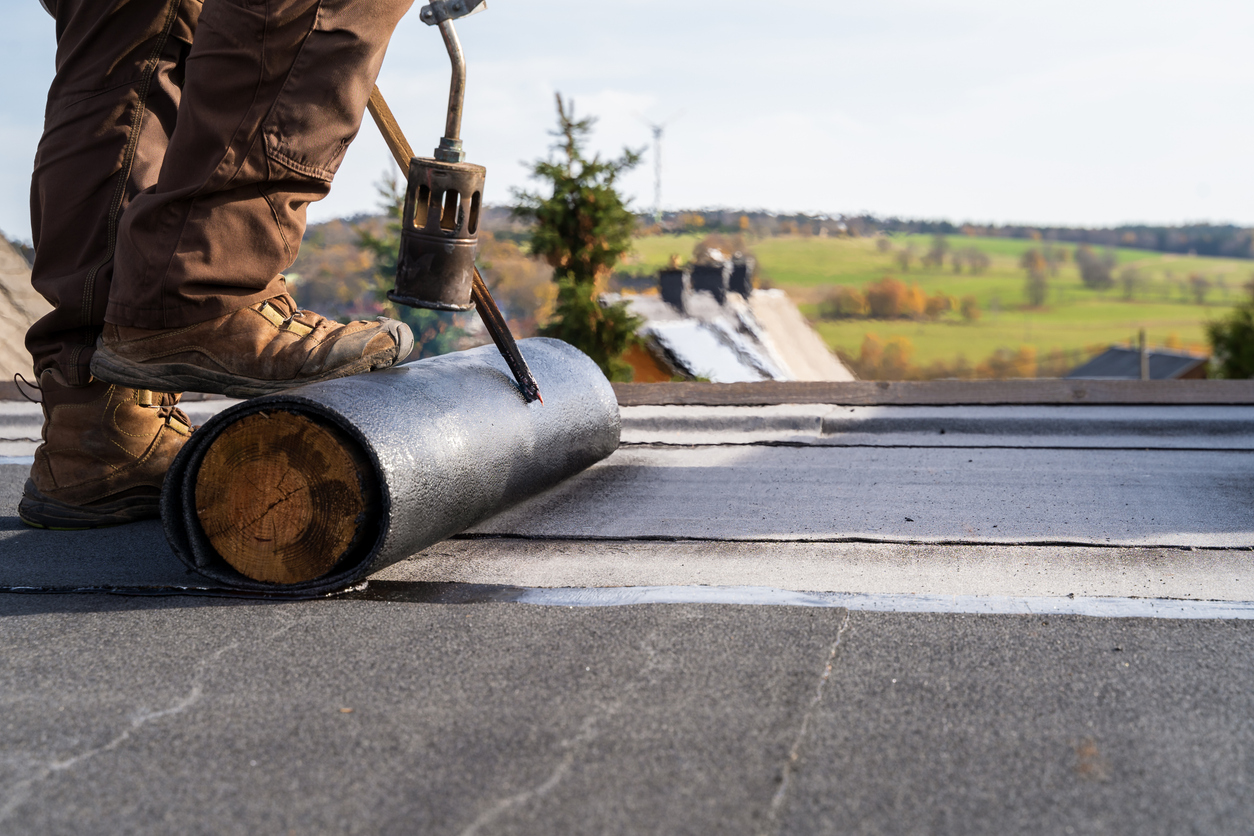
A felt roof or asphalt roof may use torch-on roofing felt and bitumen primer, which involves torch-on systems with hot flames and naked flames. Without training, this creates serious fire and safety risks.
Fibreglass flat roofs require chopped strand mat, resin, and precise curing conditions. If the materials are not fully mixed or correctly applied, the repair becomes brittle and cracks quickly. Rubber roof systems rely on exact bonding techniques, and small gaps at the edges allow water back in.
Using the wrong roofing materials or repair method often damages the surrounding roof surface and accelerates deterioration across the whole thing.
Why Flat Roof Leaks Keep Coming Back After DIY Repairs
A leaking flat roof that has been patched multiple times usually indicates an underlying issue. Poor installation, poor detailing, general wear, or an old roof nearing the end of its life all increase the risk of repeat roof leaks.
Water pooling is another major factor. Even a well-sealed patch cannot cope with standing water for long periods. Over time, pressure forces moisture into small gaps, leading to cracks, roof leaks, and water ingress in various locations.
Without a professional assessment, DIY repairs often treat symptoms rather than the cause.
When Repair Is No Longer Enough
There comes a point where repair becomes a short-term solution rather than a sensible fix. Signs that DIY work is no longer viable include recurring leaks, widespread surface damage, or visible signs of water damage inside the building.
At this stage, continuing to apply sealant or patches usually increases damage. A reliable roofer may recommend an overlay system, roof replacement, or full replacement depending on the roof condition. While this may seem like a bigger step, it often prevents far more expensive problems later.
Why a Professional Roofer Makes the Difference
A professional roofer does more than apply a patch. Professional roofing work starts with a proper inspection to understand how the roof performs as a system.
A professional assessment typically includes checking drainage, identifying pooling water, examining the flat roofing membrane, and locating hidden roof leak paths. In some cases, a controlled water test helps confirm where water enters and how it travels beneath the surface.
This approach ensures repairs prevent water properly, restore a watertight seal, and protect the roof’s structure for the long term.
So, Can You Repair a Flat Roof Yourself
You can attempt a flat roof repair yourself, but it rarely delivers a reliable or lasting result. Flat roofing failures usually involve more than visible damage, and DIY fixes often delay proper repair while increasing overall cost.
Professional help provides clarity, safety, and a solution designed to last. If you’re dealing with a flat roof leak or ongoing roof problems, professional advice makes all the difference. A proper inspection helps you avoid temporary fixes, prevent water damage, and protect your home. Contact us today for flat roof repairs near you and arrange a professional assessment you can trust.